
Use it to enjoy $3000 USD off for your API integration as an operator. Contact Us Today →
Use it to enjoy $3000 USD off for your API integration as an operator. Contact Us Today →
1. Introduction: The Biggest Player Confusion
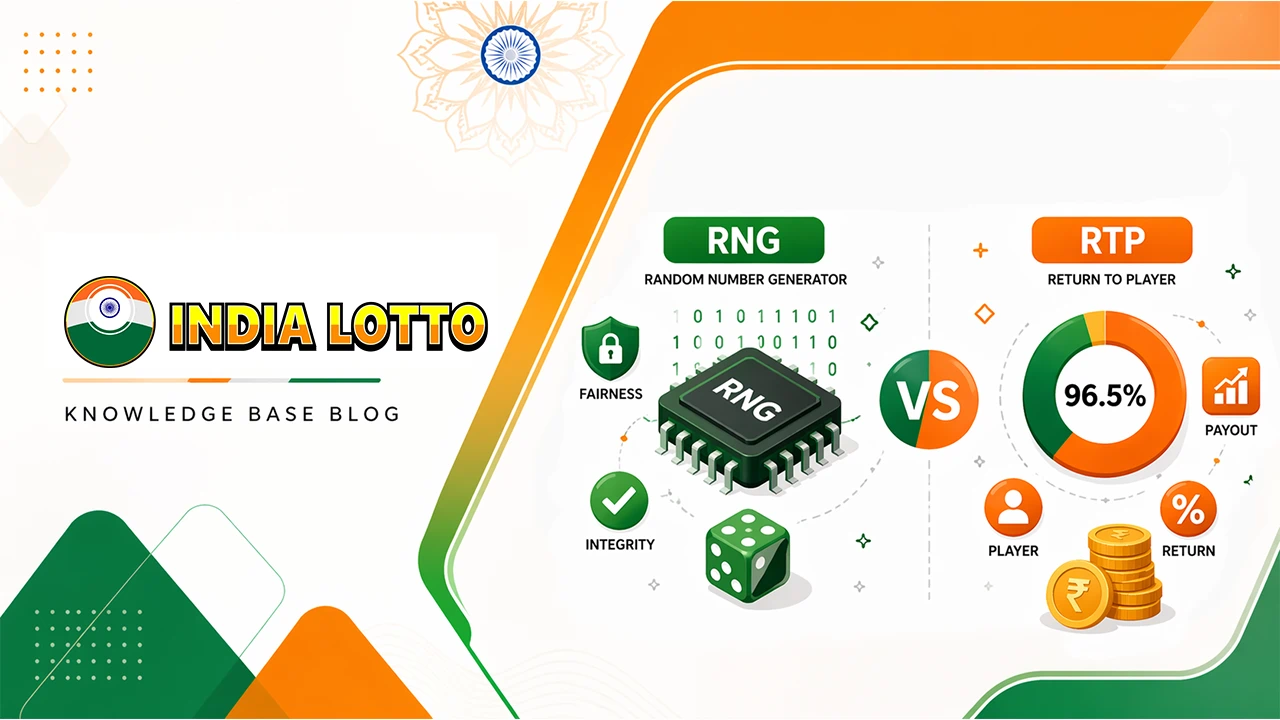
Dear players, greetings! We are India Lotto, a game developer committed to providing a fair and just gaming experience. Today, we want to discuss two critical concepts in the world of gambling—RNG (Random Number Generator) and RTP (Return to Player).
“I’ve been losing for so long; I must hit the jackpot this time!”
“This game has an RTP of 96%, so why have I lost so much without winning a big prize?”
We often come across similar questions from players. Even experienced gamblers and casino operators can find these concepts confusing. RNG and RTP are core principles in the iGaming world—they are closely related yet completely different.
- RNG ensures that every game round is truly random.
- RTP determines the expected return rate over the long term.
As game developers, before designing the RNG algorithm, we first set the RTP target value and then fine-tune the RNG parameters so that after a large number of game rounds (typically over 1,000 rounds), the game meets the expected RTP.
Thus, while RNG and RTP are interconnected, their functions and meanings are completely different.
In this article, we will take you deep into the principles of RNG and RTP, explaining why both are important but serve entirely different purposes.
2. RNG: The Source of All Outcomes
(1) What is RNG?
Imagine rolling a dice—each roll is independent and has no connection to the previous one. That’s exactly how RNG works!
RNG ensures that every game result is completely random. Whether it’s the spin of a slot machine, the shuffle of a deck of cards, or the landing position of a roulette ball, RNG operates behind the scenes to create a fair gaming environment.
(2) How Does RNG Work?
There are two main types of RNG:
- True Random Number Generator (TRNG): Generates randomness through quantum physics or chaotic environmental factors like atmospheric noise.
- Pseudo-Random Number Generator (PRNG): Uses algorithms to simulate randomness, ensuring unpredictability while being computationally efficient.
In iGaming, PRNG is the standard technology used for slots, betting, and gambling games.
(3) How is RNG Fair and Secure?
To ensure fairness and prevent manipulation, all our games undergo rigorous audits by professional certification agencies, including:
- iTech Labs
- eCOGRA
- GLI (Gaming Laboratories International)
If a game has not been certified by these organizations, there may be a risk of unfairness.
3. RTP: A Long-Term Summary of Wins and Losses
(1) What is RTP?
You can think of RTP (Return to Player) as a long-term cashback system.
For example, if you play a game with 96% RTP, this means that over a large number of game rounds, for every ₹100 wagered, around ₹96 will be returned to players. However, this is based on statistical averages over many rounds and does not guarantee results for individual games.
According to studies from eCOGRA and Gaming Labs International (GLI), online slot RTP is typically calculated based on 10,000 to 1,000,000 spins to ensure accurate statistical data and alignment with the theoretical RTP expectation (Sources: eCOGRA and GLI). This confirms that RTP is a theoretical value and that over time, actual returns tend to match the expected percentage.
In short, RTP represents the percentage of total wagers that a game returns to players over the long run.
(2) Does RTP Really Matter?
For individual players, RTP does not predict short-term outcomes. However, for casino operators and game providers, RTP is crucial because it directly affects profitability and player retention.
When developing games, we set different RTP ranges based on market demand, ensuring that the game remains balanced and engaging for players.
4. RNG vs. RTP: Different Yet Complementary
Although RNG and RTP are often discussed together, they are fundamentally two separate concepts.
- RNG is a technology that generates completely random game outcomes.
- RTP is a statistical measure that represents the long-term return percentage to players.
How Do RNG and RTP Work Together?
During the early stages of game development, we first set the RTP target range, then develop the RNG algorithm so that after a significant number of game rounds (usually at least 1,000 spins), the actual RTP aligns with the theoretical value.
In simple terms:
- RNG determines individual game outcomes.
- RTP determines the long-term trend of returns.
Although these concepts are interrelated, they serve different functions:
- RNG ensures fairness and randomness.
- RTP determines the profitability and overall payout structure.
The table below highlights their differences and how they impact gameplay:
| Attribute | RNG | RTP | Impact |
|---|---|---|---|
| Core Function | Generates completely random game results | Calculates the long-term return percentage of bets | Affects game fairness and playability |
| Can players control it? | No, each result is independent | No, it is only a long-term statistical value | Players can adjust their betting strategy but cannot influence the outcome |
| Importance for casinos and game design | Ensures game fairness | Determines the game’s profitability structure | Low RTP is suitable for high jackpot pools, while high RTP is better for long-term gameplay |
How RTP Levels Affect Gameplay
Different RTP levels influence game strategy and experience:
- Low RTP (<94%): Bigger jackpots but lower win frequency—ideal for high-risk players chasing big prizes.
- High RTP (>96%): More stable returns but fewer massive wins—suitable for long-term play.
5. Common Misconceptions About RNG & RTP
(1) Misconception 1: Games Have “Hot” and “Cold” Cycles
Many players believe that if a slot machine hasn’t paid out for a while, it is “due” for a big win.
However, RNG ensures that every game outcome is independent, meaning past results do not influence future spins.
(2) Misconception 2: Higher RTP Games Are Easier to Win
Although high RTP games have better long-term returns, this does not mean you will win every session.
In the short term, random fluctuations can cause players to experience winning streaks or long losing streaks.
(3) Misconception 3: Casinos Can Manipulate RNG and RTP
As a licensed game developer, all our games undergo strict regulatory oversight.
- RNG is certified by independent testing agencies, ensuring that outcomes remain random and fair.
- RTP is set by game developers within an approved range (typically 94%-98%), and casinos can only select from available RTP versions but cannot alter them.
Understanding these misconceptions helps players make smarter gaming choices and allows casino operators to strategically use RTP and RNG for a better gaming experience.
Conclusion
At India Lotto, we are committed to providing the most fair and transparent gaming experience. We hope this article has helped you understand RNG and RTP, avoid common misunderstandings, and make informed gaming decisions.
Whether you’re a casual player, an experienced gambler, or a casino operator, we believe this knowledge will be valuable to you.
If you’re interested in our games or technology, feel free to contact us—let’s create the best iGaming experience together!
Related Posts




Browse Our Game Library
Explore our full collection of lottery and betting games, including Wingo, Color Prediction, Matka, and more. Find the right games for your platform in just a few clicks.
Get USD 3,000 Off Setup Fee
Fill out the contact form to unlock an instant USDT 3,000 discount on your platform setup fee. Our team will review your needs and recommend the right solution for your business.
INDIA LOTTO is a trusted online lottery and game development platform in India, delivering fair, transparent, and secure gaming solutions for players and operators.
Company
Services